
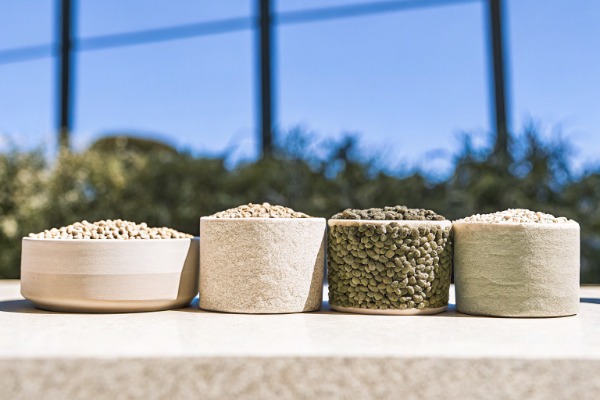
When we analyze feedback from our global clients, we often see confusion regarding pellet sizes. Choosing the wrong diameter causes tracking issues and customer complaints. This guide clarifies everything.
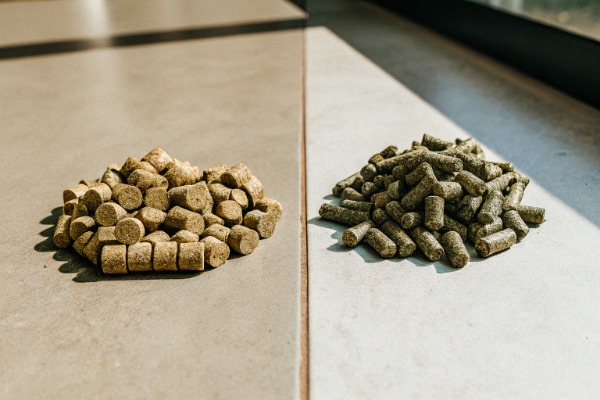
Tofu cat litter diameter directly impacts clumping speed, tracking, and paw comfort. Generally, 1.5mm pellets offer tighter clumping and better odor control, while 2.0mm provides a balanced performance. Larger 3.0mm pellets significantly reduce tracking but may clump less firmly, making them ideal for long-haired cats.
Let's dive into the technical details to help you choose the right product specifications for your business.
What is the difference between 1.5mm and 2.0mm tofu cat litter for clumping performance?
In our laboratory, we conduct drop tests to measure how quickly different pellets absorb moisture. We notice distinct behaviors between fine granules and standard pellets during these rigorous trials.
absorb moisture 1
The 1.5mm diameter pellets possess a larger surface area relative to their volume, allowing for rapid liquid absorption and tighter, rock-hard clumps. Conversely, 2.0mm pellets are slightly heavier, offering a balance between decent clumping speed and reduced tracking, though they may not encapsulate waste as tightly.
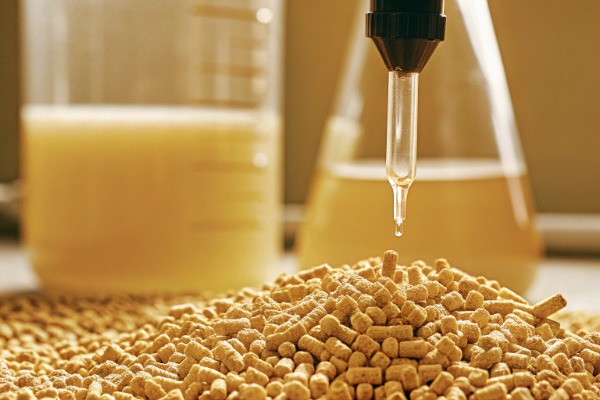
Understanding the physics behind pellet diameter is crucial for explaining product benefits to your customers. The difference of just 0.5mm might seem negligible to the naked eye, but it fundamentally changes how the litter interacts with liquid waste.
Surface Area and Absorption Speed
The primary advantage of the 1.5mm diameter lies in its surface-area-to-volume ratio. Because these pellets are thinner, they pack more densely in the litter box. When liquid hits the litter bed, it encounters more immediate contact points. This results in "instant action" clumping. In our testing, 1.5mm litter tends to trap urine before it can seep to the bottom of the tray, which is a common cause of sticking and persistent odors. This makes it an excellent choice for high-traffic litter boxes or multi-cat households where odor control is paramount.
Structural Integrity of the Clump
While 1.5mm offers speed, the 2.0mm diameter offers stability. Extremely fine pellets can sometimes become too saturated if the formula isn't perfect, leading to a "muddy" texture. The 2.0mm pellet is robust enough to maintain its shape while still absorbing liquid effectively. It creates a clump that is easy to scoop without crumbling, but it might be slightly larger than a 1.5mm clump for the same amount of liquid.
Comparison of Performance Metrics
To help you visualize the trade-offs, we have compiled data from our standard quality assurance tests.
quality assurance tests 2
| Feature | 1.5mm Diameter | 2.0mm Diameter |
|---|---|---|
| Clumping Speed | Very Fast (Instant) | Fast |
| Clump Firmness | Extremely Tight | Firm |
| Odor Containment | Superior (Less gaps) | Excellent |
| Tracking Potential | Moderate (Lighter weight) | Low (Heavier weight) |
| Paw Comfort | Soft (Sand-like feel) | Moderate |
The Impact on Dust and Breakage
Another factor we monitor on the production line is dust generation. Thinner 1.5mm pellets are more fragile. During shipping or vigorous digging by a cat, they are more prone to breaking down into fine dust compared to the sturdier 2.0mm pellets. However, high-quality manufacturing processes can mitigate this. If your market prioritizes a dust-free environment above all else, the 2.0mm option is often the safer bet as it withstands mechanical stress better than its thinner counterpart.
breaking down into fine dust 3
Which pellet diameter is most popular for resale in my target market?
Reviewing our shipping manifests to Southeast Asia and Europe reveals clear trends in consumer demand. Retailers often struggle to stock the right mix for their specific local demographics.
Southeast Asia 4
Currently, the 2.0mm diameter remains the industry standard and best-seller due to its versatility for average households. However, demand for 1.5mm litter is surging among apartment dwellers seeking superior odor control, while 3.0mm is a niche favorite for owners of long-haired breeds requiring anti-tracking solutions.
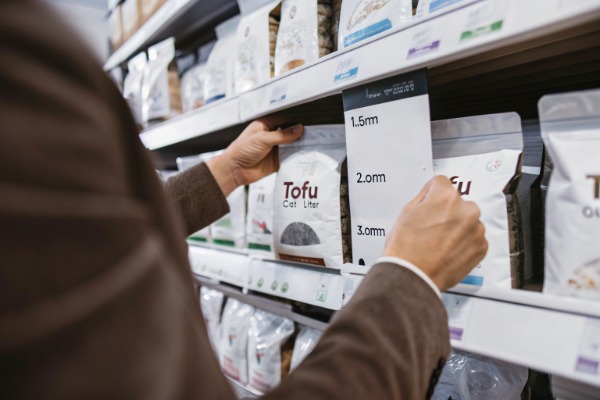
Determining the "best" diameter for resale depends heavily on understanding your end customer's lifestyle and their cats' specific needs. There is no one-size-fits-all solution, which is why many successful distributors carry a portfolio of sizes.
The "All-Rounder": 2.0mm
The 2.0mm diameter is the safe bet for mass-market retail. It is often marketed as the "Goldilocks" size—not too small to track everywhere, and not too big to hurt sensitive paws. If you are supplying supermarkets or general pet stores where the average customer wants a reliable product without needing to research technical specs, 2.0mm is the volume driver. It works well in most manual litter boxes and is generally accepted by cats transitioning from clay litter.
The "Premium Performance": 1.5mm
We are seeing a significant shift in urban markets, particularly in Asia, towards 1.5mm litter. In small apartments, odor control is the number one pain point. Customers living in smaller spaces are willing to tolerate a slight increase in tracking (which can be managed with a mat) in exchange for the superior odor locking capabilities of the 1.5mm size. This size is also highly recommended for kittens. Their delicate paws can find larger pellets uncomfortable, leading to litter box aversion. The 1.5mm texture feels more like natural sand or soil, encouraging proper bathroom habits in young cats.
The Niche Solution: 3.0mm
While less common, the 3.0mm diameter solves a specific problem: tracking. For owners of long-haired cats (like Persians or Maine Coons), fine granules are a nightmare as they stick to fur and end up on the bed or sofa. The 3.0mm pellets are heavy and large enough that they fall off the cat's paws before they leave the box.
Target Customer Segmentation
Use this table to map your inventory to your customer personas.
| Customer Profile | Recommended Diameter | Key Selling Point |
|---|---|---|
| General Cat Owner | 2.0mm | Balanced performance; low maintenance. |
| Apartment Dweller | 1.5mm | Maximum odor control; tight clumping. |
| Kitten Owner | 1.5mm | Gentle on paws; encourages use. |
| Long-Haired Cat Owner | 3.0mm | Anti-tracking; doesn't stick to fur. |
| Eco-Conscious Buyer | 1.5mm or 2.0mm | Efficient usage rates reduce waste. |
By stocking a core inventory of 2.0mm and supplementing it with 1.5mm for premium lines, you can cover the majority of market needs.
Can I request custom pellet sizes for my OEM tofu cat litter order?
We frequently adjust the die plates on our extrusion machinery to meet specific client requests. Customization allows brands to stand out, but it involves specific production considerations.
extrusion machinery 5
Yes, you can request custom pellet sizes for OEM orders, such as specific diameters or mixed-size blends. Manufacturers typically require a Minimum Order Quantity (MOQ) to offset the setup costs of changing extrusion molds. Custom sizes allow you to target specific market niches like kittens or automatic litter boxes.
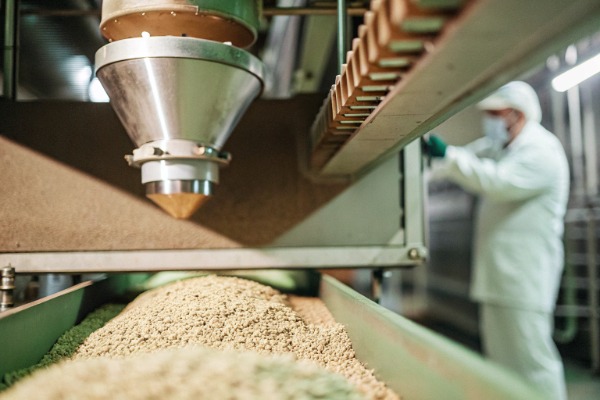
Customization is a powerful tool for differentiation in a crowded market. As a B2B buyer, you are not limited to the standard "menu" of options if you have the volume to support a custom run.
The Manufacturing Process for Custom Sizes
To change the diameter of the litter, we must shut down the production line and swap out the extrusion die plates. These plates have thousands of tiny holes that shape the tofu paste into pellets.
- Standard Dies: We keep 1.5mm, 2.0mm, and 3.0mm dies ready for constant use.
- Custom Dies: If you require a non-standard size, such as 1.8mm or 2.5mm, we can machine new plates. This usually incurs a tooling fee and requires a longer lead time for the initial order.
Blended Diameters: A Strategic Advantage
One of the most effective customization strategies we see is blending diameters. For example, mixing 70% of 2.0mm pellets with 30% of 1.5mm pellets.
- Why do this? The 2.0mm pellets provide structure and low tracking, while the 1.5mm pellets fill the gaps between the larger pellets.
- The Result: You get a litter bed that is denser than pure 2.0mm (better odor control) but tracks less than pure 1.5mm. This allows you to market a "Hybrid" or "Pro" formula that claims the benefits of both worlds.
Compatibility with Automatic Litter Boxes
If your target market heavily uses automatic litter boxes (like the Litter-Robot or similar devices), customization is vital.
- The Risk: Some automatic rakes crush fragile pellets, and some sifters get clogged by long 3.0mm pellets.
- The Solution: We can adjust not just the diameter, but the length of the cut. For automatic boxes, a "crushed" or "millet" style tofu litter (irregular small granules) often works best because it flows like sand through the sifting mechanism. Requesting a custom "crushed" specification can position your brand as the "Automatic Box Specialist."
Considerations for OEM Orders
Before requesting a custom size, consider these factors:
- MOQ: Custom runs usually require at least one full container load (approx. 20-24 tons) to ensure production efficiency.
- Testing: We always recommend a pilot test. We can produce a small lab sample for you to test clumping and tracking before committing to mass production.
- Packaging: Ensure your packaging claims match the physical attributes of the custom size (e.g., don't claim "Zero Tracking" on a 1.0mm custom ultra-fine batch).
How does the diameter affect the usage rate and cost-efficiency for my customers?
Our quality control team measures waste weight after scooping to calculate actual product longevity. High consumption rates often frustrate end-users and damage brand loyalty if not explained correctly.
Diameter significantly influences cost-efficiency; 1.5mm pellets form smaller, more compact clumps, wasting less clean litter per scoop. Larger 3.0mm pellets often create larger, looser clumps that consume more product over time. Therefore, smaller diameters generally offer better longevity and value per bag for the consumer.
When marketing your product, "Value per Month" is often a stronger selling point than "Price per Bag." The physical diameter of the pellet plays a massive role in how long a bag lasts.
like the Litter-Robot 7
The Science of the "Tight Clump"
When a cat urinates on 1.5mm litter, the liquid is absorbed almost immediately by the surrounding particles. Because the particles are small, they fit together like a puzzle, creating a dense, compact ball.
- Result: You only scoop out the exact volume of the waste.
In contrast, with 3.0mm litter, there are large air gaps between the pellets. Liquid can trickle down through these gaps, wetting more pellets than necessary before the clump solidifies.
- Result: The final clump is physically larger and contains more "clean" pellets that got trapped in the wet mass. Over a month, this excess waste adds up, forcing the customer to buy more litter sooner.
Usage Rate Analysis
We have modeled the consumption rates based on an average adult cat (approx. 4-5kg) urinating 2-3 times per day.
die plates 8
| Pellet Diameter | Clump Characteristics | Est. Bag Duration (6L Bag) | Cost Efficiency |
|---|---|---|---|
| 1.5mm | Small, dense, flat | 25 – 28 Days | High |
| 2.0mm | Medium, round | 21 – 24 Days | Medium |
| 3.0mm | Large, irregular | 18 – 21 Days | Low |
The "Top-Up" Factor
While 1.5mm is more efficient in clumping, it has a hidden cost: tracking loss. Because small pellets are easily carried out of the box on paws, the litter level in the box drops not just from scooping, but from scattering.
- If a customer has to vacuum up 5% of the litter from the floor every week, the efficiency gains from tight clumping might be negated.
- This is why we often advise customers that 1.5mm is the "Efficiency Choice" only if used with a good litter mat or a high-sided box.
Educating the Consumer
As a distributor, you can use this information to tier your pricing or guide customers:
- Budget-Conscious Buyers: Recommend 1.5mm or 2.0mm. Explain that while the bag might look small, it lasts longer because they throw away less unused litter.
- Convenience-Focused Buyers: Recommend 2.0mm or 3.0mm. They might spend slightly more over a year, but they save time on sweeping and cleaning up scattered pellets.
Ultimately, the "cheapest" litter is the one that stays in the box and forms the smallest clumps. By understanding these dynamics, you can help your customers save money and build trust in your brand's expertise.
Maine Coons 9
Conclusion
Selecting the right diameter balances clumping power, tracking control, and cat comfort. We recommend stocking 2.0mm as a core product, while offering 1.5mm for high-performance needs.
lies in its surface-area-to-volume ratio 10
Footnotes
1. Defines the chemical process of liquid uptake relevant to litter performance. ↩︎
2. Links to the American Society for Quality regarding testing standards. ↩︎
3. Provides general information on particulate matter and dust formation. ↩︎
4. Provides geographical context for the market trends discussed. ↩︎
5. Explains the manufacturing process used to create the pellets. ↩︎
6. Industry definition of the shipping term FCL by a major logistics provider. ↩︎
7. Official product page for the specific automatic litter box mentioned. ↩︎
8. Defines the specific tooling component used to shape the litter. ↩︎
9. Authoritative breed information from the Cat Fanciers’ Association. ↩︎
10. Explains the physical principle governing the speed of liquid absorption. ↩︎